Pricing the Boost: How US Bettors Can Tell a Real Edge From a Marketing Number
Photo: Ilias371, CC0, via Wikimedia Commons
A 30% profit boost sounds generous until the same outcome is available at a better standard price elsewhere. The advertised percentage measures the size of the adjustment, not the value of the wager. For US players comparing sportsbook promotions in 2026, the useful figure is expected value: the offer's worth after the fair probability of the outcome is applied.
Start with decimal odds and fair probability
Every comparison begins with a common language. Convert American odds to decimal: for positive odds, decimal = 1 + (American/100); for negative odds, decimal = 1 + (100/absolute American). A +150 price becomes 2.50. A -120 price becomes 1.833.
Next, estimate fair probability. The simplest method is no-vig normalization across a two-way market: p_fair = (1/decimal_side) / ((1/decimal_side) + (1/decimal_other_side)). For a deeper read, use a liquid market or a consensus of sharp books. Do not strip vig from the boosted book alone; the promotion may already be the reason its price looks odd.
The break-even formula
For a cash-stake bet at boosted decimal odds d_b, expected value per $1 staked is: EV = (p_fair * d_b) - 1. The break-even fair probability is p* = 1 / d_b. If the true chance of winning is below that number, the boost is negative EV even though the headline percentage is positive.
For a free bet token where the stake is not returned, the formula changes: EV = p_fair * (d_b - 1) * stake. The token has no cash break-even in the same sense because the player risks no cash, but it is not worth its face value. A $50 free bet at +250 with a 30% fair probability is worth $50 * 2.50 * 0.30 = $37.50 in expected value, not $50.
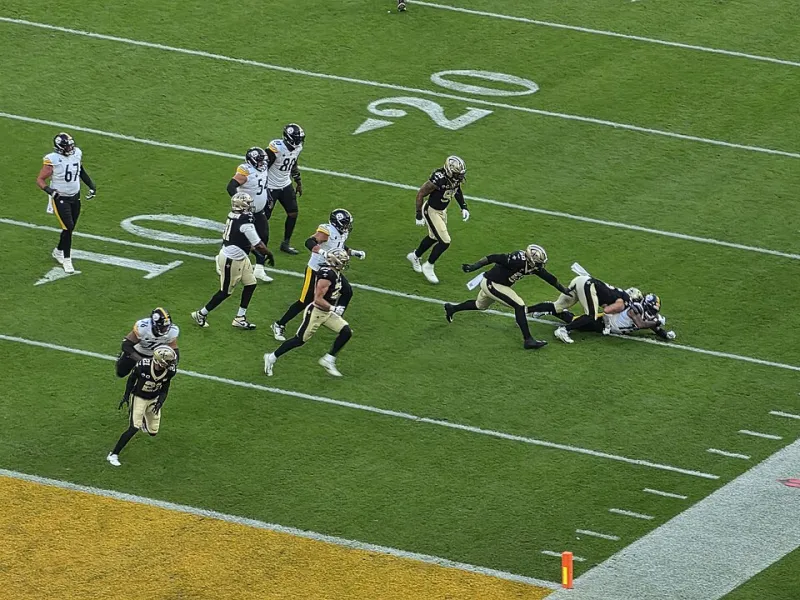
NFL example: the boost that loses to a standard line
Suppose an NFL moneyline is +120 at Book A, which offers a 25% profit boost. The base decimal is 2.20. A 25% profit boost raises the profit portion from 1.20 to 1.50, producing decimal odds of 2.50, or +150. The break-even fair probability is 1 / 2.50 = 40%.
Now assume a no-vig consensus puts the fair probability at 40%. The cash EV per $100 is (0.40 * 2.50 - 1) * 100 = $0.00. The boost is exactly break-even at that estimate. If another regulated book offers +160 on the same outcome, decimal 2.60, the standard price has EV = (0.40 * 2.60 - 1) * 100 = $4.00. The 25% boost is weaker than the unboosted market elsewhere. At a 42% fair probability, the boosted bet is worth $5.00 per $100, while the +160 standard bet is worth $9.20. The headline percentage did not survive the comparison.
NBA example: free bet and profit boost
An NBA moneyline at +100 receives a 50% profit boost. Base decimal 2.00; boosted profit 1.00 * 1.50 = 1.50; boosted decimal 2.50. With a fair probability of 45%, cash EV per $100 is (0.45 * 2.50 - 1) * 100 = $12.50. A standard +135 at another book, decimal 2.35, has EV = (0.45 * 2.35 - 1) * 100 = $5.75. Here the boost is the better price.
For a free bet token, use the same NBA price differently. A $50 token at +250, decimal 3.50, with 30% fair probability, is worth $50 * (3.50 - 1) * 0.30 = $37.50. If the sportsbook lets the player convert the token into cash at a 70% rate, the cash equivalent is $35.00. That is a useful benchmark: the token is only superior if its expected value exceeds the conversion offer.
A comparison framework for boosted versus standard markets
- Convert every price to decimal.
- Estimate p_fair from a no-vig market or consensus, not from the promotion.
- Calculate EV with the correct stake treatment.
- Compare the boosted decimal with the best standard decimal at another regulated US book. If the standard decimal is higher, the boost is not the best available price, regardless of the percentage.
- Check max stake, eligibility, expiration, minimum odds, and whether the boost applies to the current line.
- Record the result in a ledger before placing the bet.
Fine print that changes the math
- Profit boost versus odds boost. A profit boost increases winnings only; an odds boost replaces the price. They are not interchangeable.
- Free bet stake. A token is not cash. If the stake is not returned, do not use the cash-bet EV formula.
- Max stake. A 50% boost capped at $10 is a small promotion at best; the percentage is not scalable.
- Line movement. If the boosted price applies only to a stale line, the accepted odds may differ from the displayed odds.
- Cash-out restrictions. A cash-out can void the boost or settle at a reduced price. Treat the option as a separate, often negative-EV decision.
- Expiration and eligibility. A boost that expires in six hours forces rushed decisions and reduces its practical value.
The five-minute ledger
Use a simple table: date, sportsbook, event, base odds, boost type, boosted decimal, fair probability, EV per $100, best standard price elsewhere, and verdict. After ten entries, patterns appear. Some books price boosts aggressively on high-margin markets; others use the boost to move a price closer to the market. The ledger separates the two.
An odds boost is a pricing event, not a gift. Convert it to decimal, apply a fair probability, and compare it with the best standard market. The promotions that survive that test are the ones worth the stake.