Thirty Doors, One Ledger: Auditing December Daily Casino Promos in 2026

Photo: Kritzolina, CC BY-SA 4.0, via Wikimedia Commons
December promotions arrive as a countdown: one reward per day, each with a short claim window and a headline that invites daily logins. The presentation is deliberately festive, but the arithmetic is ordinary. For US casino and sportsbook players, the relevant question is not the total advertised value of the calendar. It is the expected cash value after restrictions, compared with what a single lump-sum offer would produce under the same bankroll and time constraints.
ExcelBet Casino's editorial position is straightforward: compare bonuses, track odds, and bet smarter. A daily calendar is a bonus structure like any other. It deserves the same skepticism as a deposit match with a 20x rollover or a parlay insurance token with a minimum-odds clause.
Why a Calendar Is Not a Bonus
A calendar fragments one promotional budget into many small claims. That fragmentation can be useful for players who log in daily anyway, but it also creates several failure points. A missed day may void later rewards. A credit may expire before the player can use it. A wagering cap may apply per day rather than across the whole promotion. A game restriction may exclude the very titles that make the credit useful.
The advertised total is therefore a ceiling, not an expectation. A calendar that promises $300 across 24 days is not equivalent to a $300 bonus unless every credit is claimable, playable, and convertible under realistic conditions. In most cases, the operative number is lower, sometimes materially so.
The Four Levers of a Daily Offer
A proper December audit reduces each daily reward to four levers. The first is credit type. Is the reward cash, bonus credit, a free spin, a risk-free bet, or a token that must be paired with a qualifying wager? Cash is transparent. Bonus credit is not, because its cashout value depends on rollover and game contribution.
The second is the wagering cap. Daily offers often carry a maximum bet or maximum conversion amount. A $10 credit with a $5 cap on winnings is not a $10 opportunity. It is a $5 opportunity with extra steps.
The third is the claim and expiry window. A 24-hour window is workable for committed players. A four-hour window is a scheduling test. The fourth is time and attention cost. Daily logins are not free. They create behavioral pressure to play on days when no genuine edge exists.
Credit type and cashout status
Non-sticky bonus credit generally allows the player to withdraw winnings after meeting rollover, while the bonus itself is removed. Sticky credit may remain tied to the account and affect subsequent withdrawals. Free spins may convert at a fixed rate per spin, not at the market value of the slot's payout. Each distinction changes the expected value.
Wagering cap and game weighting
A calendar credit that must be wagered on slots at 100% contribution is not comparable to one restricted to table games at 10% contribution. The effective rollover is the stated rollover divided by the game-weighting percentage. A 10x requirement on a 20% contribution game behaves like a 50x requirement for practical purposes.
Claim window and forfeiture
US players should record whether missed days forfeit the remaining calendar or only the missed reward. Some promotions allow catch-up claims; others do not. A calendar with no catch-up provision should be discounted for the probability of at least one missed day, especially during the holidays.
Time and attention cost
A daily calendar is a retention tool. It rewards habitual engagement, not necessarily disciplined betting. If the player would not otherwise open the app, the time cost and the risk of incidental deposits belong in the ledger.
A 2026 Audit Worksheet
For each day, assign a realistic cash-equivalent value rather than the advertised value. A workable formula is:
Expected value = (face value × expected conversion rate × completion probability) − (required deposit + time cost + incidental-play risk).
The expected conversion rate should reflect rollover, game weighting, and cashout caps. Completion probability should reflect the claim window, holiday schedule, and whether the player can realistically meet the terms. This is not a precise science, but it forces discipline.
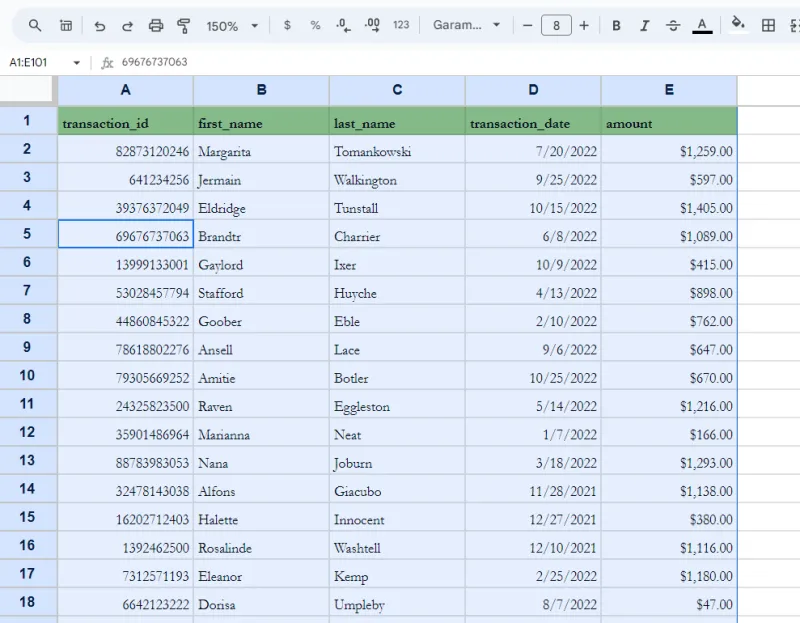
A simple scoring sheet can use five columns: date, face value, restrictions, realistic value, and go/no-go. The go/no-go column should be binary. If a daily offer requires a deposit, a minimum-odds wager, or a game the player would not otherwise choose, the realistic value may be negative even when the face value is positive.
Daily Doors vs. a Lump-Sum Offer
Consider a hypothetical December calendar advertising $10 per day for 24 days, or $240 in total. Suppose each credit carries 10x rollover on slots, a $20 maximum cashout per credit, and a 24-hour claim window. The player must log in daily and cannot combine credits. The realistic conversion rate might be 35% to 55%, depending on the player's normal volume. The calendar is then worth roughly $84 to $132 in expected cash value, before time cost.
Now compare a single $100 bonus with 10x rollover and no daily claim requirement. If the player would complete that rollover anyway, the lump sum may be simpler and more valuable. If the player specifically wants small, low-risk sessions, the calendar may win. The comparison should be made on expected cash value and administrative burden, not on the larger advertised total.
A useful rule for 2026: do not accept a daily calendar merely because the cumulative number looks large. Price the median day, not the best day. Price the missed day, not the perfect streak. Price the cashout cap, not the headline credit.
What to Record Before December 1
US players should save the terms page for any advent-style promotion before claiming the first reward. Screenshots should capture the reward schedule, wagering requirements, game restrictions, expiry rules, and cashout limits. If the terms change mid-promotion, the saved copy is the reference point.
It also helps to set a separate ledger for December. Record deposits, claims, wagering progress, and withdrawals. A calendar can obscure the overall bankroll picture because each day feels small. The ledger restores the aggregate view.
The Bottom Line
December daily promos are not inherently good or bad. They are conditional offers. The analytical question is whether the conditions match the player's normal behavior and whether the expected cash value beats a simpler alternative. A calendar with thirty doors may be worth less than one well-structured lump-sum bonus. The audit method above is designed to reveal that difference before the countdown begins.
ExcelBet Casino recommends treating every daily reward as a contract with a price. Compare the bonus, track the odds, and bet smarter.